
FELLOW STORIES | ACCURVIA TECH TALENT ACCELERATOR | COHORT 1
Temitayo Hannah Fadipe
Contributor
Ten Weeks. Real Fellows. This Is What Structured Tech Training Actually Produces.
Nobody walked in here already knowing how to do this. That was never the point.
Before the first session of the cohort opened, people showed up. Not seasoned developers with years of experience. Not professionals pivoting from high-paying careers. Just learners — people who had decided that tech was where they were going and needed the right environment to make it real.
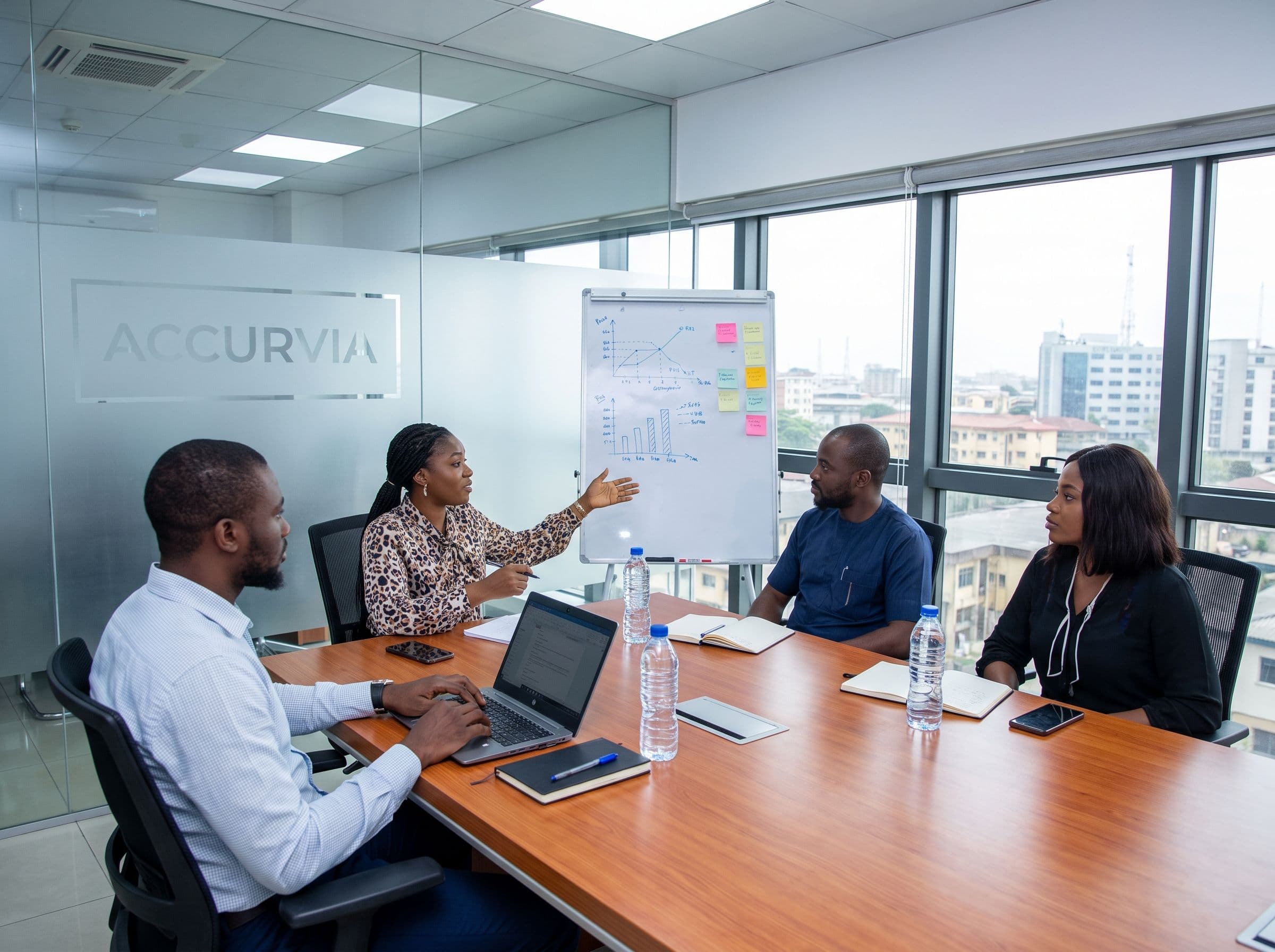
Ten weeks later, these people have built projects. Shipped interfaces. Written backend logic. Collaborated across disciplines in ways that mirror how actual tech teams operate. They have checked in, pushed through difficult weeks, been challenged beyond what felt comfortable, and come out the other side with something real to show for it.
Three of the fellows agreed to let us share their stories. David, Sosina, and Samson — in their own words and in the context of what ten weeks inside the Accurvia Tech Talent Accelerator Program actually looks like.
What the Accelerator Is — For Anyone Reading This From the Outside
The Accurvia Tech Talent Accelerator is a structured, cohort-based upskilling program designed to take motivated learners from foundational knowledge into job-ready execution. Across ten weeks, fellows work within dedicated tracks — Frontend Development, Backend Development, UI/UX Design, Quality Assurance, Mobile Development, DevOps, Product Design, Product Management, and more — while also learning to work cross-functionally, the way real tech teams do.
The program is not tutorial-based. It is project-based. Fellows are not consuming content — they are building, presenting, iterating, and receiving feedback in a professional environment.
David · UI/UX Design Track
David came into the Accelerator knowing he was interested in how things looked and felt. Over ten weeks, that changed. David moved through the fundamentals of UX research, information architecture, and interaction design in Figma — not in theory, but by building. He designed interfaces with real briefs, received structured critique, and had to defend his design decisions the way a professional would in a client-facing environment.
What stands out about David's journey is not just the technical growth. It is the shift in how he thinks about users. Early in the program, design decisions were aesthetic. By week four, they were intentional — grounded in what users actually need, not what looks good in a presentation.
"The program has helped me pick up my rusty self where I left it and introduced me to new things. It has also been very insightful and helpful as to how working as a team actually entails and looks like. I have been able to add more knowledge and always prepared for dynamic questions from team members”.
— David, UI/UX Design Fellow
Sosina · Backend Development Track
Backend development is the discipline most people misunderstand from the outside. It is invisible to end users — no interface, no visual output — just logic, systems, and the infrastructure that makes everything else work. For someone coming in as a learner, it is also one of the most technically demanding tracks to enter from scratch.
Sosina entered the Backend track knowing the basics — enough to write some code, enough to understand what a function does. Ten weeks later, Sosina has built backend systems that work. Not toy examples. Not tutorial clones. Real logic built to solve real problem statements in a structured team environment.
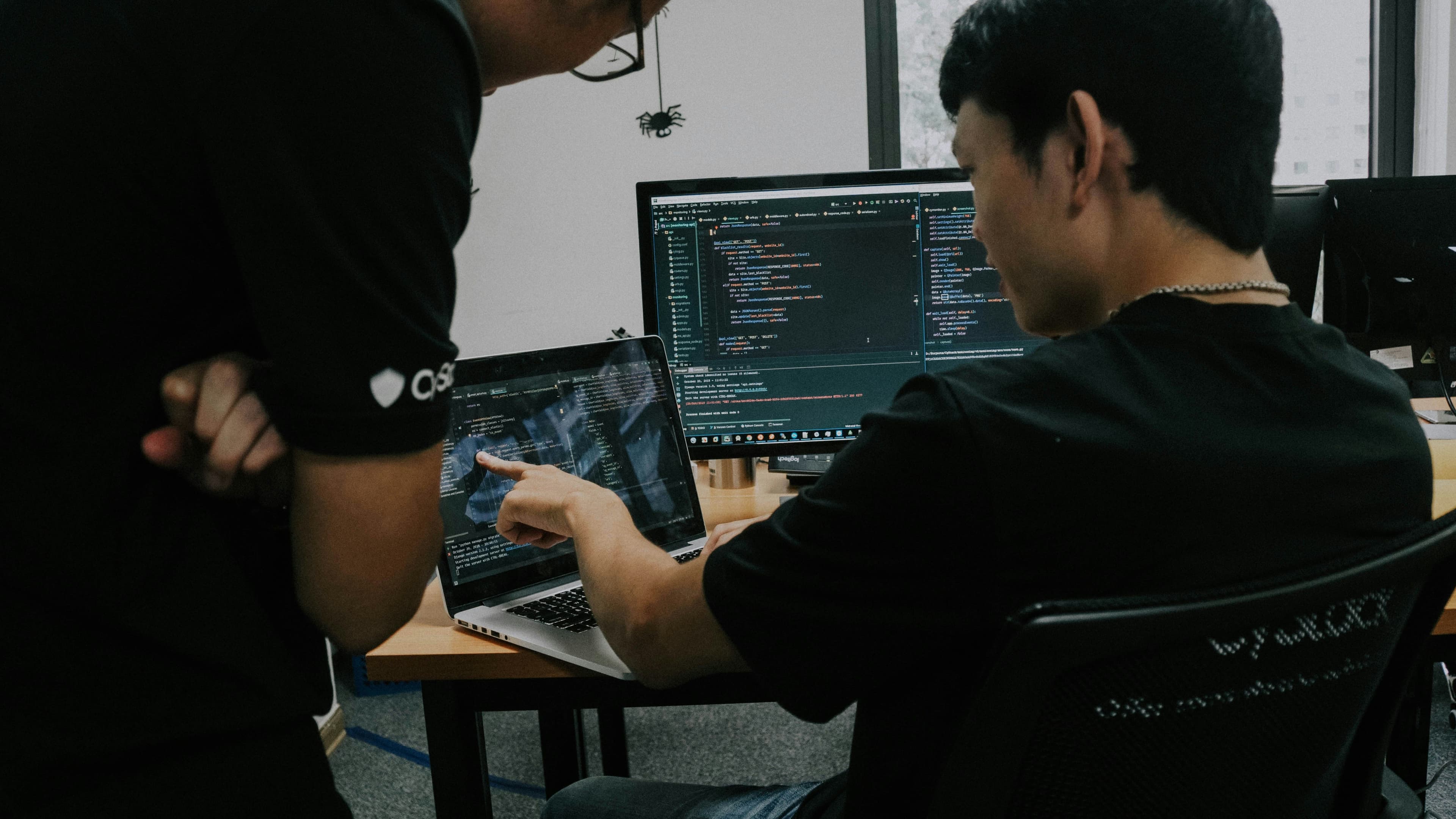
What the Accelerator gave Sosina that self-study rarely provides is the experience of building under accountability. There are check-ins. There are deadlines. There are review sessions where you have to show what you built and explain why you built it that way. That environment — uncomfortable as it is sometimes — is what builds professional-grade habits, not just professional-grade knowledge.
"Quite thriving and interesting, trying to meet up with our deadline, increasing in knowledge about collaboration and some software tools. I would recommend this to someone who is interested in speed and fast learning'“.
— Sosina, Backend Development Fellow
Samson · Frontend Development Track
Frontend development is often the entry point people choose when they first decide to learn tech. It is visual, immediately responsive to what you build, and relatively accessible to begin. What it is not — at a professional level — is simple.
Samson came in with the kind of foundation that many self-taught developers have: some HTML, some CSS, enough to build a basic webpage. Over ten weeks, Samson closed that gap. He worked through structured exercises that moved from fundamentals into real interface-building. He sat in cross-functional sessions where his frontend work had to connect with David's designs and Sosina's backend logic — not theoretically, but in practice, in the same way it would work on a real product team.
That cross-functional experience is one of the things that separates the Accelerator from a standard frontend course. Samson did not just learn how to write code. He learned how to work with a designer's specifications, how to ask the right questions when something does not make sense, and how to integrate with a backend structure he did not build himself. That is what real frontend development looks like.
"Overall, the experience has been insightful and rewarding. I appreciate the support from the mentors and the opportunity to learn from other participants."
— Samson, Frontend Development Fellow
Beyond the Three: What the Full Cohort of Produced
David, Sosina, and Samson are three stories. There are more. People who came in as learners and leave as people who have built, collaborated, received structured critique, and demonstrated their skills in a professional environment.
Across the ten weeks of the Cohort, the program delivered:
- Weekly check-in sessions where each fellow's progress was tracked, flagged, and supported — not left to self-report
- Cross-functional project work that required fellows from different tracks to build together, not just alongside each other
- Real project briefs that produced reviewable, demonstrable outputs — not just exercises
- Peer review panels where fellows presented and defended their work to structured critique
- A professional development environment that built habits — consistency, accountability, communication — not just skills
The screenshots exist. The check-in records exist. The project files exist. What you cannot screenshot is the shift in how these ten people carry themselves now compared to week one — but that shift is real, and it is what the Accelerator is ultimately designed to produce.
You cannot fake ten weeks of showing up, building, and being held accountable. The work either exists or it doesn't. Cohort 1's work exists.
What This Means for the Next Cohort — and for anyone watching from the outside
If you have been following this Cohort — watching the updates, reading the posts— and something in you has been thinking 'that could be me', then what David, Sosina, and Samson have demonstrated is important for you to understand.
They were not ready when they walked in. They were just willing. Willing to show up, stay accountable, build things that felt too hard, ask questions, and trust the process long enough to see what it produces.
The Accurvia Tech Talent Accelerator is not built for people who already know how to do everything. It is built for people who are serious about learning, who want a structured environment that will not let them fall through the cracks, and who are ready to stop watching other people build careers and start building their own.
The next cohort is coming. Details will be shared with the interest list first. If you do not want to miss the window — the time to get on that list is now, not when the announcement drops.
→ Join the interest list for Cohort 2
→ Learn more about the Accurvia Accelerator Programme
→ Have questions? Talk to us → accurvia.com/contact
Know someone who has been thinking about making a move in tech?
Share this with them. The next cohort won't wait.
More to Read